How to set up a healthcare business in Bangladesh: 13 key
certificates you need
If you are planning to start a
healthcare business in Bangladesh—whether a
hospital, clinic, diagnostic center, or nursing home—you must ensure
proper legal setup, registration, and compliance. First, you need to
complete the standard company registration procedures, followed by
obtaining specific licenses and certificates from health authorities
such as the DGHS and DGDA.
Starting a healthcare business is meaningful, yet the rules can seem
confusing when you begin. That’s where Barnomala Architects & Interior helps. We guide
you through the full setup process and handle the 13 important
licenses and certificates needed to run legally. Our goal is to make
the journey smoother so you can focus on building a trusted
healthcare service.
Do you want to set up a hospital or clinic?
Contact us now
or visit our office for our consultancy service.
Why invest in a healthcare business in Bangladesh?
Healthcare in Bangladesh has improved a lot over the years.
Government programs, community clinics, and regular policy updates
have made treatment easier to access for most people. Private
hospitals such as Apollo, United, and Square have also grown with
time, offering better facilities and helping many patients get
reliable care. Key advantages include:
Liberal policies: The 1986 industrial policy encourages
private investment with no equity restrictions.
Foreign investment perks: Full repatriation of profits
under the Foreign Private Investment (Promotion & Protection) Act
1980.
Market potential: A growing middle class and urbanization
drive demand for specialized services like telemedicine,
diagnostics, and wellness centers.
Government support: Incentives via BIDA for economic zones
and export-oriented units.
The 13 licenses and certificates essential for a healthcare business
setup
Establishing a healthcare facility is more than just infrastructure.
It demands 100% compliance with government rules and regulations.
The following 13 certificates are necessary for starting any
hospital, clinic, diagnostic center, or nursing home.
Trademark/brand name clearance certificate:
It’s the first and most important step to obtain approval from the
Office of the Register of Joint Stock Companies and Firms (RJSC).
It creates a brand value.
Certificate of incorporation:
After name clearance, draft the Memorandum and Articles of
Association and other required forms, submit them to the RJSC
office, and pay the required fees as per law. Thereafter, obtain
the Certificate of Incorporation.
Trade license:
A trade license is compulsory for any business in Bangladesh. It
is issued by a local government authority like a city corporation,
municipality, or union council.
Taxpayer identification number (TIN) certificate:
Apply for the TIN certificates. It’s essential for formal business
and tax compliance. The National Board of Revenue (NBR) issues
TIN.
Bank account & capital encashment certificate:
Open a temporary bank account in the company's name and, for
foreign investments, remit the paid-up capital and obtain a Bank
Encashment Certificate from the bank.
VAT registration certificate (BIN):
Register with the NBR again for the Value Added Tax (VAT)
certification to obtain a Business Identification Number (BIN
certificate).
DGHS license:
The primary requirement for a hospital, clinic, or diagnostic
center is a license from the Directorate General of Health
Services (DGHS) under the Ministry of Health and Family Welfare.
This is a mandatory license for health-related businesses.
Drug license:
If the hospital or clinic is managing a pharmacy, selling
medicines, or dealing with pharmaceutical goods. Then a drug
license is required from the Directorate General of Drug
Administration (DGDA). This requires having a qualified pharmacist
(Grade A, B, or C).
Environment clearance certificate (ECC):
Obtain an ECC from the Department of Environment (DoE), especially
if the project is a large industrial unit or a hospital with over
50 beds.
Fire license:
A fire license and safety plan approval must be obtained from the
Fire Service and Civil Defence authorities after submitting
approved building designs and an NOC (no objection certificate).
Factory license:
If the business involves manufacturing (e.g., pharmaceuticals or
medical devices), a factory license and layout approval are needed
from the Department of Inspection for Factories and Establishments
(DIFE).
Import registration certificate (IRC) / Export registration
certificate (ERC):
If you plan to import medical equipment, devices, or medicines,
you must obtain an IRC (and an ERC for export) from the Office of
the Chief Controller of Imports and Exports (CCI&E).
Membership certificate:
Becoming a member of a local Chamber of Commerce and Industry or
relevant trade association (e.g., a specific healthcare or
pharmaceutical association) is often a necessary step for
networking and advocacy.
The 13 certificates and compliance steps are essential because
healthcare is one of the most strictly regulated sectors in
Bangladesh. Each license ensures a different layer of safety,
legality & credibility.
Without a DGHS license, your facility is not legally allowed to
operate under healthcare rules and regulations.
Compliance ensures safety and quality of care and builds trust
among patients.
Having a legally registered company with a trade license and tax
compliance allows smoother business operations and avoids
penalties.
Proper setup, including infrastructure, equipment, and staff, is
essential to meet regulatory inspections and audits.
Starting a healthcare business requires careful
navigation of legal, regulatory, tax, safety, and licensing
requirements. By following the 13‑certificate framework and
Barnomala Architects & Interior’s guideline, you can establish a legitimate,
compliant, and sustainable healthcare institution.
You will need a trade license, TIN, and the healthcare
facility license from DGHS. Greatly depending on your
setup, you may also need fire safety approval and
environmental clearance.
The time varies based on your documents and facility
setup. If everything is in order, the process moves
faster, but delays happen when plans or safety papers need
correction.
Most investors form a private limited company under the
RJSC for better compliance. It also helps when dealing
with banks, partners, and regulatory bodies.
The building should meet structural, fire, and safety
standards set by local government authorities. Enough
space for patient flow, equipment, and emergency access is
important.
Small clinics may not need it, but hospitals and larger
diagnostic centers usually do. The Department of
Environment decides based on size and waste management
needs.
Yes, of course. Doctors must have valid BMDC registration,
and nurses and technologists need proper certification.
DGHS checks staff lists during the license review.
Yes, a pharmacy requires a separate drug license from
DGDA. A registered pharmacist must oversee dispensing as
per national rules and regulations.
You will need building papers, layout plans, safety
certificates, an equipment list, and qualified staff
details. DGHS reviews these to confirm you meet the
minimum standards.
Yes, foreign investment is permitted if all legal and
banking rules are followed. Company formation, capital
remittance, and regulatory filings must be completed
properly.
Most DGHS licenses need regular renewal to stay valid.
Renewal greatly depends on keeping your staff records,
safety approvals, and compliance documents updated.
Healthcare Business Setup
Barnomala Architects & Interior helps you get the 13 required healthcare licenses.
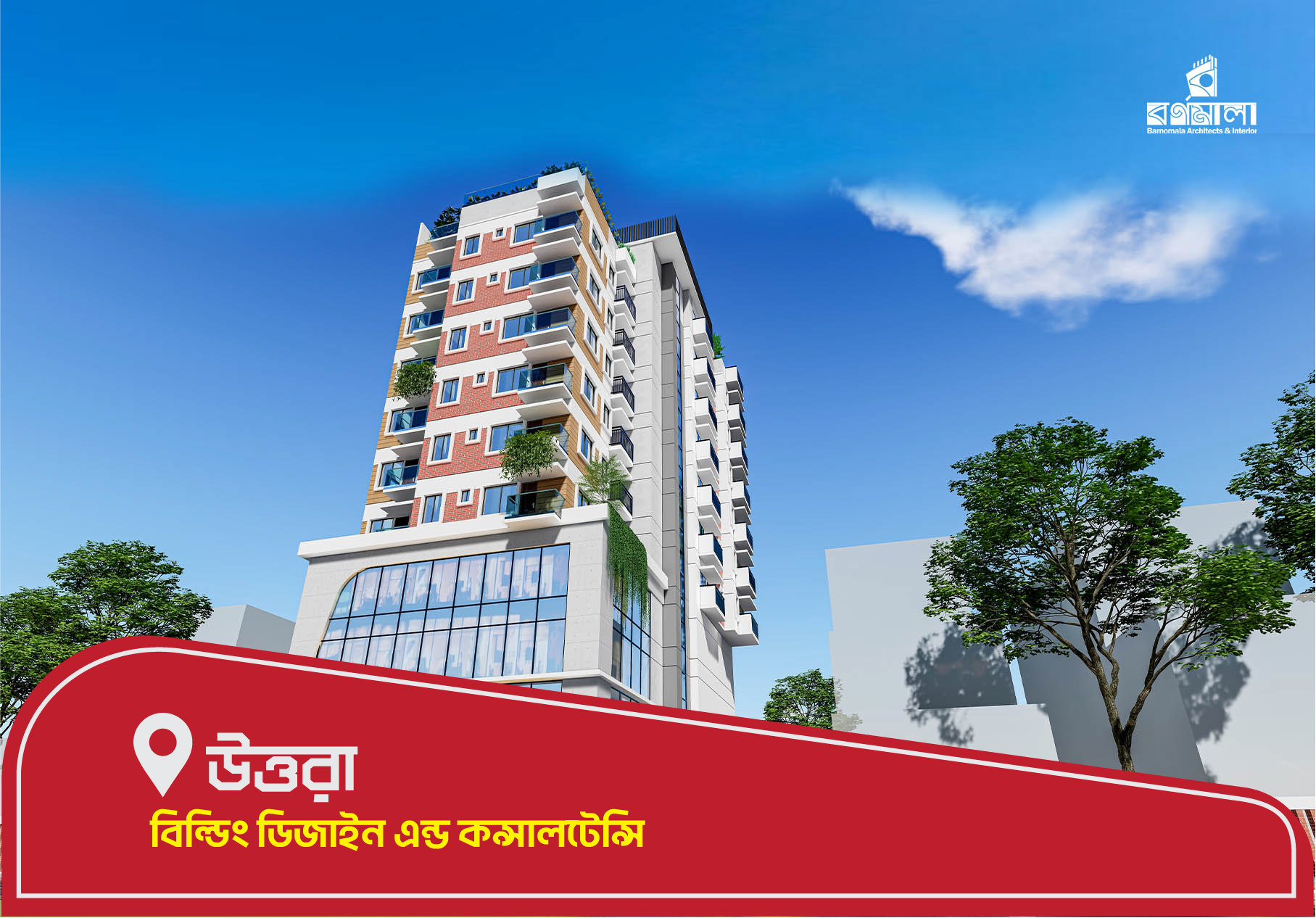
We delivered a complete end-to-end solution for this commercial-cum-residential building project. Our services began with a digital land survey and soil test report to ensure accurate planning and structural safety. We then handled the full architect...
Plan your building with Barnomala Architects & Interior, a trusted architectural firm in Bangladesh for homes, offices, factories, and commercial projects.
Discover the best home architecture design in Bangladesh with modern layouts, sustainable planning, and customized residential solutions for your dream home.
Reliable structural design company in Bangladesh. We offer innovative, safe & cost-effective structural design for residential, commercial & industrial projects
Please tell us about your residential home space or commercial space requirements. One of our creative, modern interior designers or interior decorator will walk you through our service options.



 +8801713776555